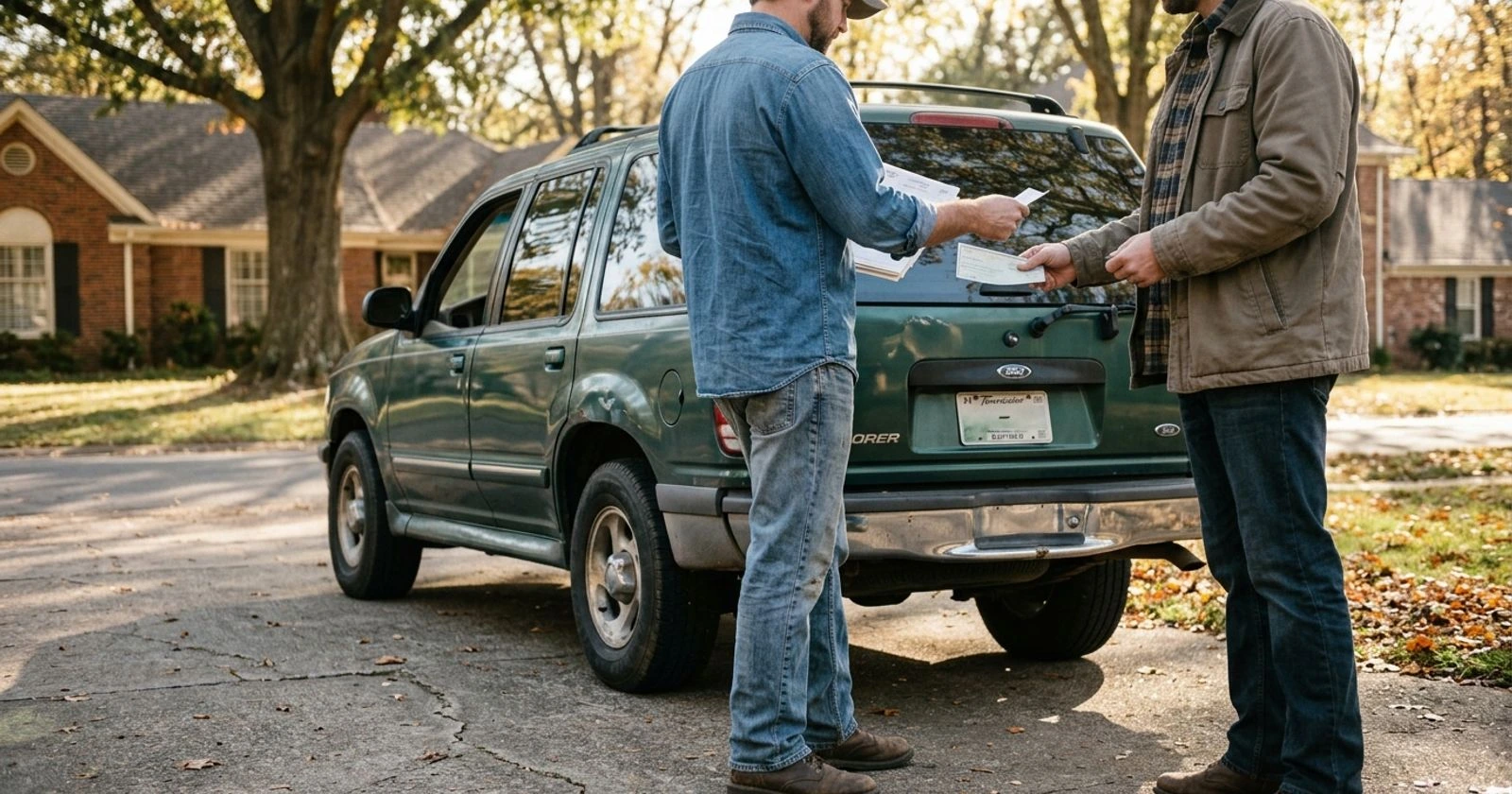

Selling a car without maintenance records is a negotiation variable, not a dealbreaker. Most Nashville sellers treat missing paperwork as a confession of neglect. They drop their asking price before anyone asks, or spend days hunting down old service receipts from shops that may not even exist anymore.
Both moves cost real money. The smarter approach: understand what buyers already know from a Used Car’s History Report, price the information gap honestly, and choose a selling channel that relies on data rather than paper.
Quick Summary
- VIN reports already reveal title history, odometer readings, and accident flags, with or without your service folder
- Missing records create a risk discount, not an automatic disqualification, especially under 100,000 miles
- A current ASE-certified inspection is worth more to a buyer than a stack of old oil change receipts
- Direct car buying services price algorithmically from VIN data, so missing records hurt less than in private sales
- Tennessee law does not require sellers to provide maintenance records for a private sale
What Buyers Already Know Before You Hand Over a Single Document
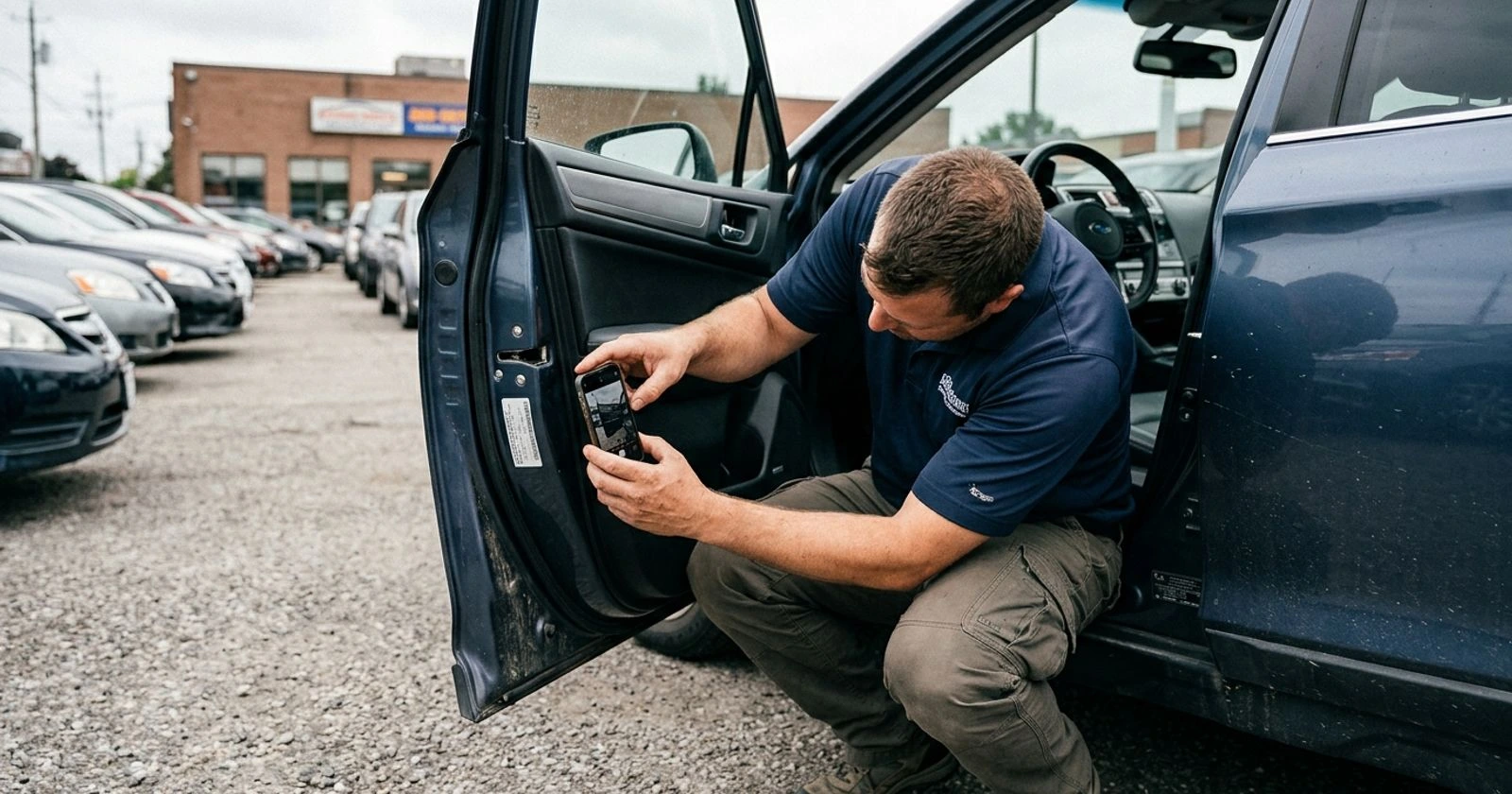
Before a serious buyer ever asks about your service history, they’ve already run a VIN history report. Services that pull from NMVTIS (the National Motor Vehicle Title Information System), along with Carfax and AutoCheck, compile data from every state DMV, including Tennessee’s.
Every time your car was registered or its odometer was recorded at renewal, that number entered a national database. A buyer can see mileage progression across multiple years without you saying a word.
Beyond odometer data, a VIN report typically flags:
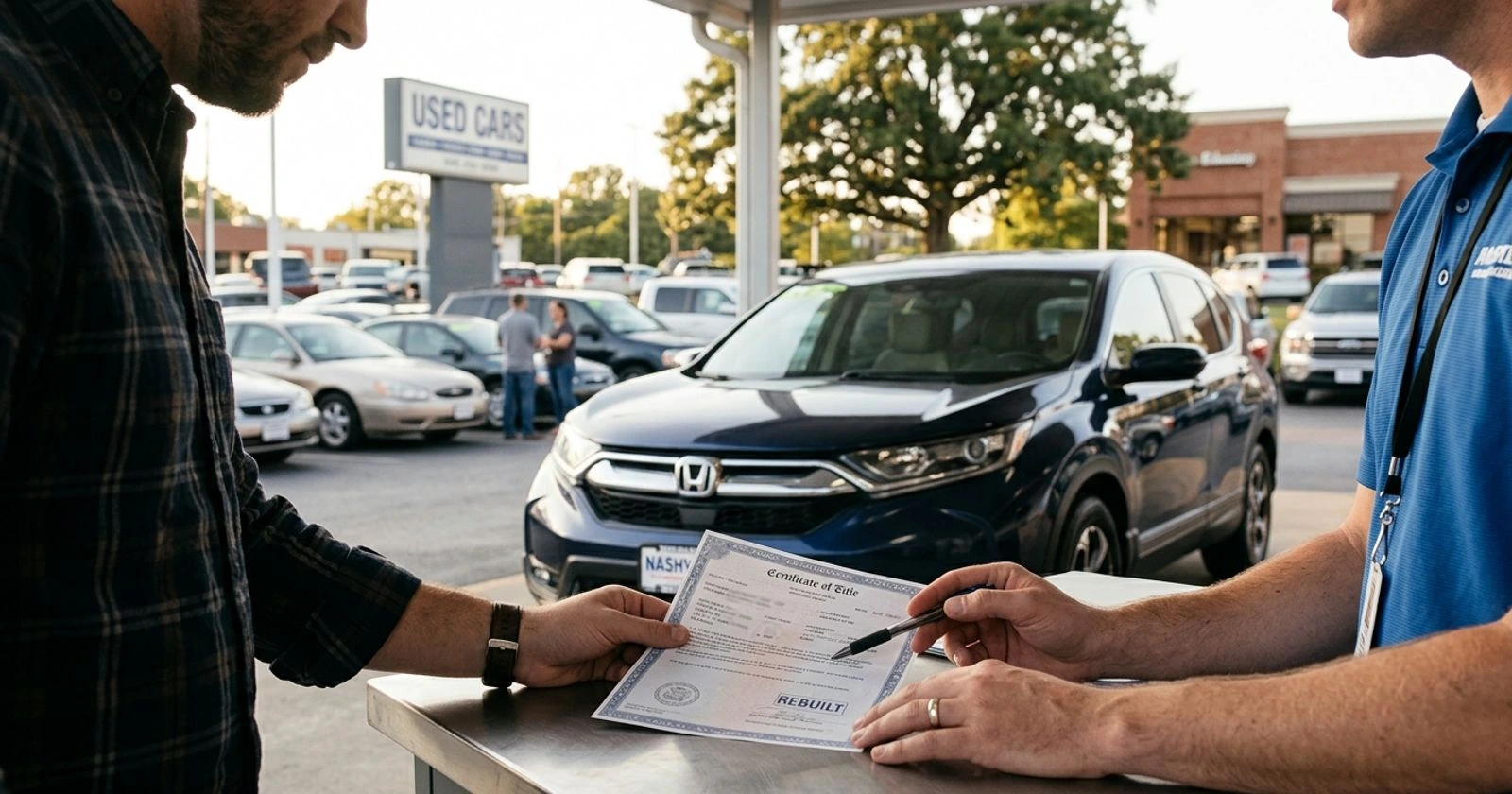
- Title events: salvage, rebuilt, flood, or lemon law buybacks
- Reported accidents and structural damage
- Open manufacturer recalls
- Reported theft or recovery history
- Number of previous owners and use type (personal, rental, fleet)
What a VIN report cannot show is routine maintenance. Oil changes, tire rotations, brake pad swaps, coolant flushes — none of that is reported to any government database. That’s the actual information gap created by missing service documentation, and it’s narrower than most sellers assume.
Buyers and professional appraisers treat this gap as a risk discount. On a vehicle under 100,000 miles with a clean VIN history, the discount is measurable but rarely catastrophic. On a high-mileage vehicle with multiple owners and incomplete history, the gap carries more weight. Knowing which situation you’re in before you list is worth the five minutes it takes to run your own report.
Can You Sell a Car Without Maintenance Records and Still Get a Fair Price
The short answer is yes. Three factors consistently offset missing records in a buyer’s valuation, and sellers who address all three get closest to full market value.
Current mechanical condition carries more weight than historical records. A written inspection from an ASE-certified shop or an AAA-approved facility gives a buyer a snapshot of what the car is doing right now. That’s more actionable than a receipt from three years ago. A pre-sale inspection typically runs $80 to $120 at reputable Nashville shops, and the written report travels with the car through every conversation.
Visible upkeep matters. Tire tread, brake pad depth, fluid condition, and interior wear all signal how the vehicle was treated. Buyers who can’t verify history will look harder at what they can see. First impressions carry real weight in private-sale negotiations.
A 2022 Toyota Camry with 68,000 miles, no service folder, and a clean VIN report still attracts competitive offers in Nashville because the model holds strong residual value in the Middle Tennessee market. A niche vehicle with lower demand gives buyers more room to push back on price.
Understanding how fuel prices are changing used car demand in Nashville can also help you time your sale to market conditions.
Mc Auto Direct’s online valuation tool is built for exactly this scenario. Sellers submit a license plate or VIN to get a direct offer, and the platform prices the vehicle using VIN-sourced data and current Middle Tennessee market conditions, not a paper service folder.
Pro Tip: Run your own VIN report before you list. You’ll see exactly what buyers see, which lets you address any discrepancies, confirm title status, and price accurately. Sellers who skip this step often discover surprises mid-negotiation.
Stop Trying to Reconstruct Records You No Longer Have
This is the mistake that costs sellers the most time for the least payoff. Chasing dealership service printouts or calling mechanics from years ago to rebuild a paper trail is an expensive use of energy. Professional buyers discount reconstructed records almost as heavily as missing ones, because they can’t be independently verified. A printed service summary from a shop’s internal system is not a primary document.
Nashville’s used car market moves on a tight timeline. Trucks and SUVs, which are high-demand segments in Middle Tennessee, lose measurable value month over month. A week spent chasing paperwork is a week of depreciation you absorb. If you’re trying to sell your car fast in Nashville, reconstructing a paper trail is the wrong place to start.
There’s also a legal distinction worth understanding. Under Tennessee Code Annotated 47-18-104, the Consumer Protection Act, sellers must disclose known mechanical defects. That obligation covers what you know, not what you can document. Missing records don’t create a disclosure obligation. Hiding a known transmission issue does.
Keep those two things separate. For a full breakdown of what documentation you actually need, see this guide on paperwork to sell a car in Tennessee.
The math is straightforward: invest $80 to $120 in a current pre-sale inspection rather than days in paperwork recovery. You end up with something a buyer can actually act on.
Which Selling Channels Penalize Missing Records the Least
Channel selection is the most underused variable in this conversation. Where you sell matters more than what paperwork you have.
Direct car buying services price vehicles algorithmically. They use VIN data, market comps, current inventory levels, and regional demand signals.
A missing service folder is one input among many, and it carries less weight than it does in a one-on-one negotiation where an individual buyer has leverage and anxiety about what they don’t know.
If you want to understand how a trade-in compares to a cash sale in this context, that comparison is worth reviewing before you commit to a channel.
Private-party platforms work differently. Nashville buyers on community marketplaces are more likely to walk away entirely or negotiate aggressively when records are missing, because they don’t have the data tools that professional buyers use. The information asymmetry works against the seller.
Franchise dealerships taking trade-ins apply a standard reconditioning budget to any vehicle they can’t verify. That budget gets deducted from the offer regardless of what you bring in. Sellers rarely negotiate that number back up once it’s applied. If you’re carrying a loan on the vehicle, check this resource on how to sell vehicles with a loan before you approach any buyer.
Pro Tip: If you go the private-sale route despite missing records, a current inspection report and a freshly printed VIN report handed to the buyer at the first showing closes more deals than any amount of verbal reassurance.
The cleanest path for sellers who want to skip the negotiation entirely: get a cash offer today built on real market data. No service folder required. If you’re weighing your options, you can also sell your car in Nashville through a direct channel that prices from VIN data, not paperwork. Check your number before the Nashville summer market shifts.
Core Insights
Missing service history reduces perceived value but rarely ends a sale. Buyers and professional appraisers use VIN-based data to fill most of the historical gap anyway. Sellers who want to move quickly can also explore same-day car selling in Nashville to understand what the process actually looks like.
- Condition and mileage carry more weight than service history for most vehicles under 100,000 miles
- A current ASE-certified inspection is a stronger selling asset than reconstructed paperwork
- Tennessee law requires disclosure of known defects, not production of service records
- Selling channels that price algorithmically from VIN data penalize missing records far less than private buyers do
- Running your own VIN report before listing is the single highest-value step a Nashville seller can take If you’re ready to move forward, get in touch with us or submit your plate and VIN directly at mcautodirect.com to see what your vehicle is worth in the current Nashville market.
Frequently Asked Questions
Will I get significantly less money if I try to sell a car without maintenance records?
The discount varies by vehicle age, mileage, and model. On a well-maintained vehicle under 80,000 miles with a clean VIN report, the gap is typically smaller than sellers expect. Industry pricing trends suggest the difference is often in the low hundreds for a mid-range vehicle, not thousands, especially if you can show a current mechanical inspection.
Can a buyer in Tennessee legally demand maintenance records before purchasing?
No. Tennessee law does not require private sellers to produce service history. Sellers must disclose known defects under the Consumer Protection Act, but that obligation covers what you know about the car’s condition, not your ability to produce documentation.
What if I bought the car used and never had records to begin with?
This is common and well understood by professional buyers. A VIN report, a current pre-sale inspection, and honest condition disclosure are enough for most direct-purchase transactions. Not having records you never received is a different situation from losing records you once had. You can also sell used car for cash through services that base offers on data rather than paperwork.
Does dealership service history matter more than an independent shop history?
Not necessarily. ASE-certified independent shops are recognized as credible by buyers and appraisers alike. What matters is that work was documented at the time it was done and that the documentation is verifiable. Shop affiliation is less important than the legitimacy of the record itself.
How does running a VIN lookup help me as a seller before I list?
Running your own report lets you see exactly what any buyer will see before they see it. You can confirm title status, spot any mileage discrepancies, check open recalls, and price your vehicle accurately for the Nashville market. Sellers who skip this step regularly get surprised mid-negotiation. For more guidance on the full process, browse our used car buying tips and seller resources.